 kgeographer Karl Grossner, PhD
Project Portfolio
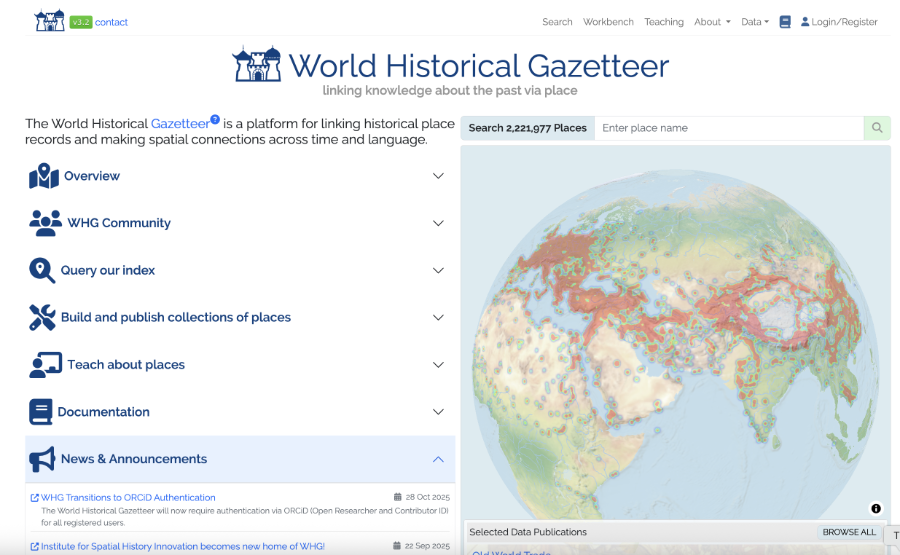
World Historical Gazetteer (WHG; web site)
A global digital humanities platform for linking, reconciling, and publishing historical place data. I served as Co-Investigator, Technical Director, and Lead Developer from 2017 to mid-2024, designing and building the data model, application architecture, and tools that power WHG’s open linked-place infrastructure.
Read more →

Linked Places Format (LPF)
A lightweight JSON-LD/GeoJSON extension for representing historical places with temporal depth. With early collaborative input I created LPF as the successor to my earlier GeoJSON-T, enabling multiple temporally scoped names, geometries, types, and relations in a single place record for interoperable linked gazetteer workflows.
Read more →

Geographic Lens on Stories (GLOS; web site )
An ongoing KGEO Research personal project applying computational methods to global folklore and creation myths, including digitized ATU/TMI indexes, semantic-embedding tools, and structured myth analysis pipelines utilizing large language models from OpenAI and Anthropic. Read more →

Authorial London (web site)
A literary geography project mapping place references in works by 47 London-based writers across seven centuries, built as the first instance of a potential “Authorial {X}” platform. I served as co-investigator with Kenneth Ligda and lead developer, designing and developing the data model, mapping workflows, and Rails-based application.
Read more →
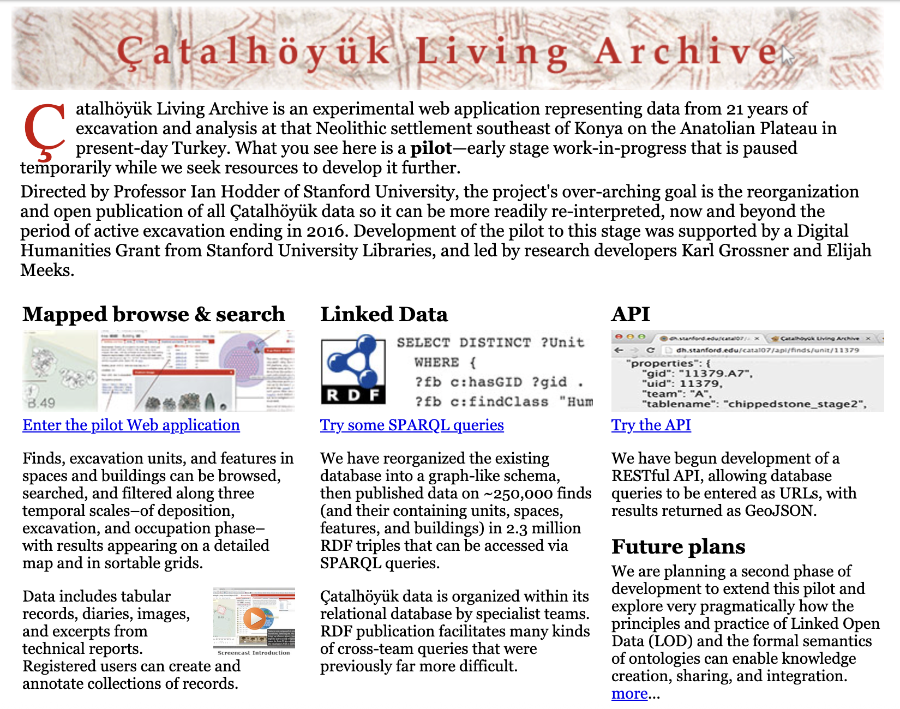
Çatalhöyük Living Archive
A pilot digital archive transformation integrating decades of excavation data from Ian Hodder’s Çatalhöyük project into a linked, spatial-temporal, multimodal research environment. I designed the Living Archive concept, restructured the underlying datasets, published the record as Linked Open Data, and built a prototype interface for exploring units, finds, features, and interpretations across time and space.
Read more →
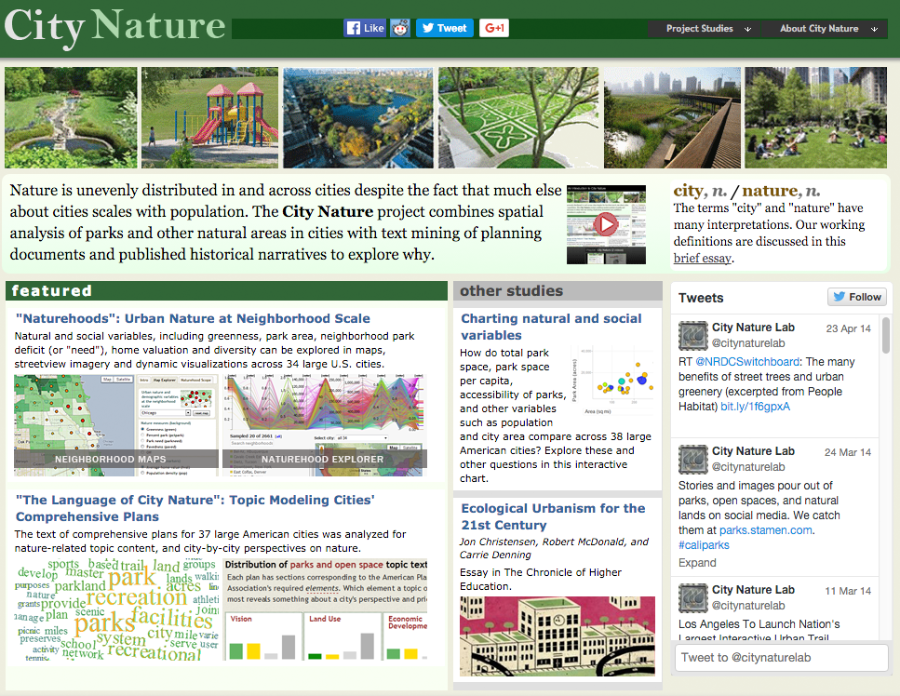
CityNature
An interdisciplinary Stanford project led by Jon Christensen combining remote sensing, GIS analysis, topic modeling, and urban environmental history to examine how major U.S. cities provide — or fail to provide — access to “nature.” I co-developed the data models, designed GIS and land-cover workflows, and designed and built the interactive visualization tools used to explore neighborhood-scale greenness and planning-language themes.
Read more →
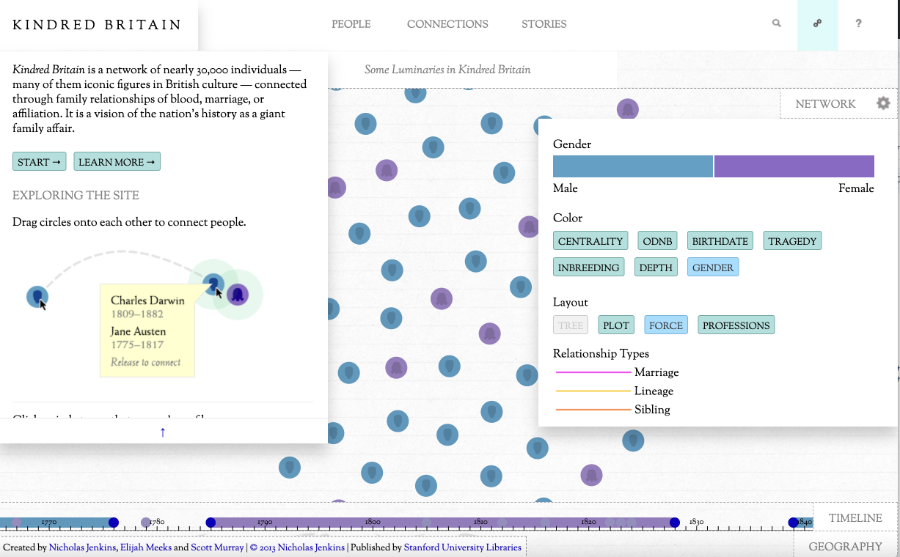
Kindred Britain (web site)
A large-scale digital humanities project tracing kinship across British cultural history. I contributed to the early technical foundation by converting the source genealogical dataset into an event-based relational model, facilitating the project’s later expansion into rich visualizations and complex relationship analyses.
Read more →
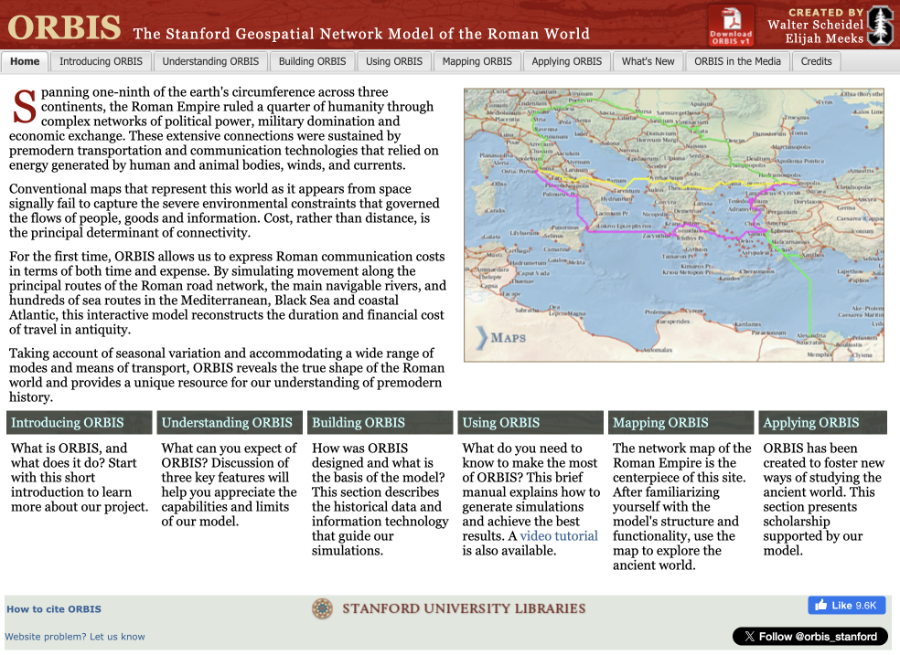
ORBIS – The Stanford Geospatial Network Model of the Roman World (current web site)
A landmark digital reconstruction of movement and transport across the Roman world by Walter Scheidel and Elijah Meeks. I designed and built the first public ORBIS web interface and helped guide its presentation as an early “interactive scholarly work,” including the framing essays that now anchor the project. I later contributed to exploratory efforts toward a reusable “ORBIS in a Box” framework.
Read more →

TeachSpatial: Resources for Spatial Thinking and Learning
A UCSB project to define the conceptual foundations of spatial thinking and harvest related educational resources using the National Science Digital Library’s OAI-PMH metadata services. I led development of a controlled vocabulary derived from published science education standards, the metadata pipeline, and the original TeachSpatial web portal.
Read more →

PhD Dissertation – Representing Historical Knowledge in Geographic Information Systems
My doctoral project developed a Spatial History Ontology (SHO) and a prototype spatial-temporal database to model historical knowledge in geographic information systems. The work defined representational requirements for digital historical atlases, introduced ontology-driven methods for managing geo-historical information, then demonstrated their efficacy and potential. Read more →